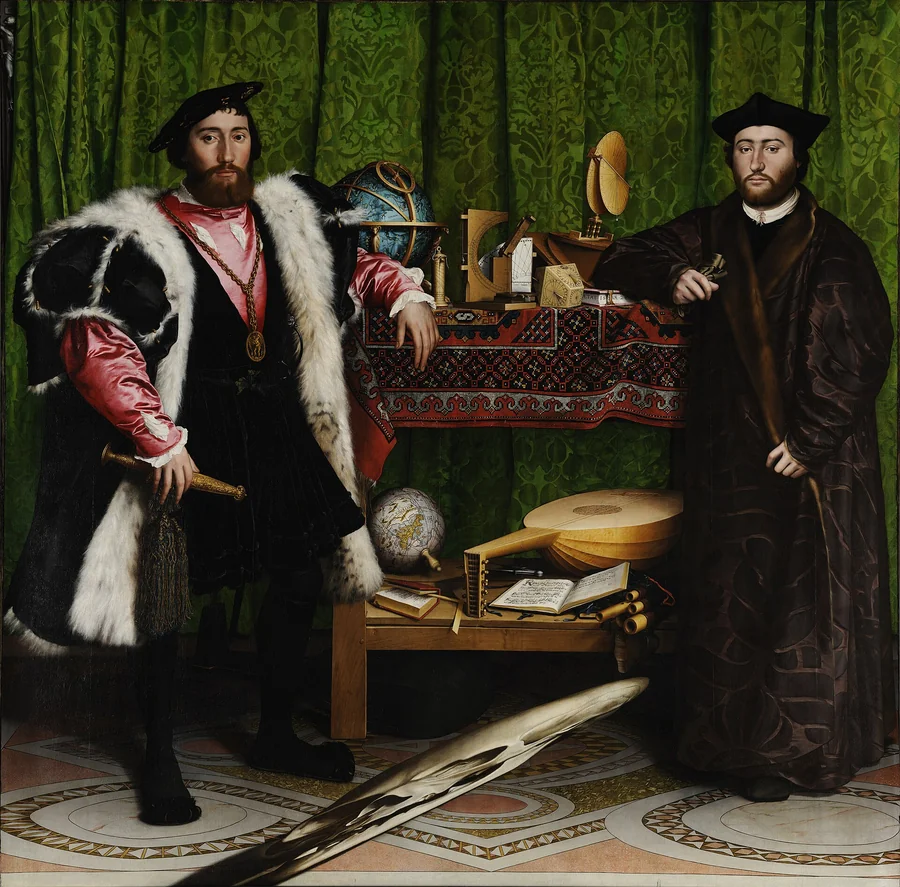
The Ambassadors
Hans Holbein the Younger
A double portrait with a skull that emerges from an oblique view.
A painted room appears to recede into the wall, although its apparent back wall projects towards the viewer.
Compare the left-hand photograph in Figure 1 with the construction views in Figure 2 of the linked paper. Find the apparent back wall, then ask which part is physically closest. Use the artist’s films to see how a moving viewpoint changes a reverspective.
See Sticking-out Room in Figure 1A painted room appears to recede into the wall, although its apparent back wall projects towards the viewer.
Compare the left-hand photograph in Figure 1 with the construction views in Figure 2 of the linked paper. Find the apparent back wall, then ask which part is physically closest. Use the artist’s films to see how a moving viewpoint changes a reverspective.
A painted room appears to recede into the wall, although its apparent back wall projects towards the viewer.
Compare the left-hand photograph in Figure 1 with the construction views in Figure 2 of the linked paper. Find the apparent back wall, then ask which part is physically closest. Use the artist’s films to see how a moving viewpoint changes a reverspective.
A truncated pyramid projects outwards, but its painted perspective suggests an inward room. Near and far exchange roles. When the depth inversion holds, moving past the relief can make the painted scene seem to turn.
A double portrait with a skull that emerges from an oblique view.
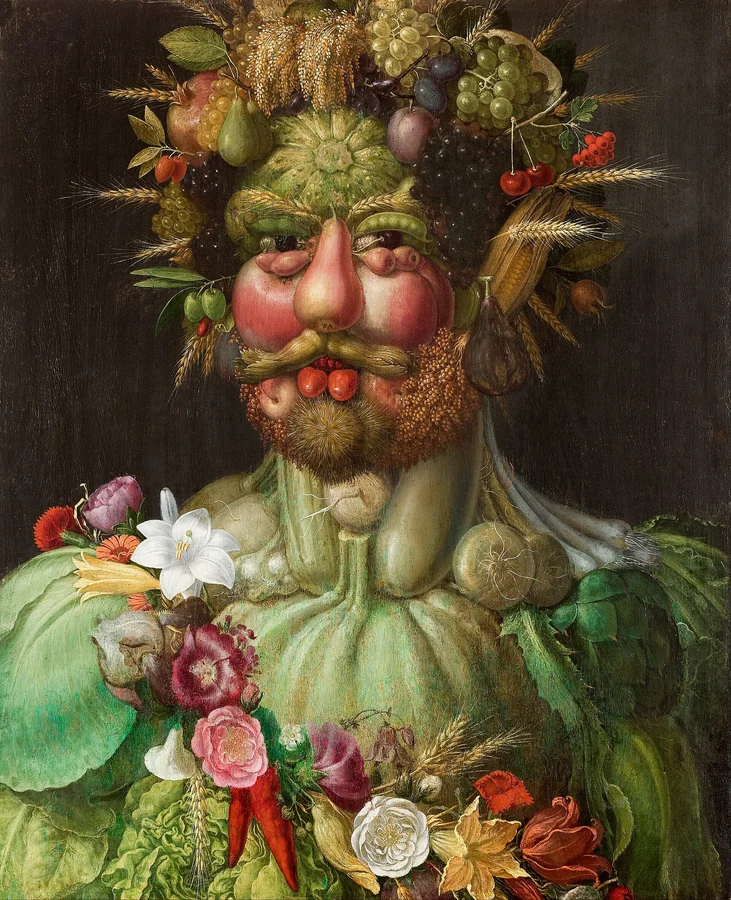
Rudolf II appears as a face assembled from fruit, flowers, and vegetables.
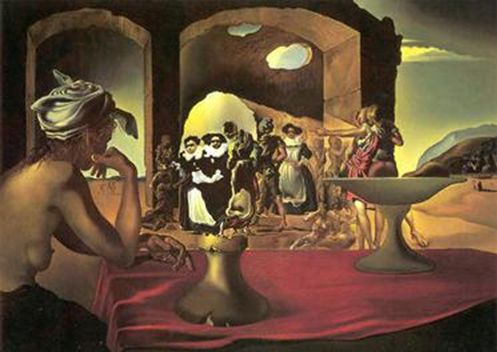
Two figures beneath an arch become the eyes of a much larger face.