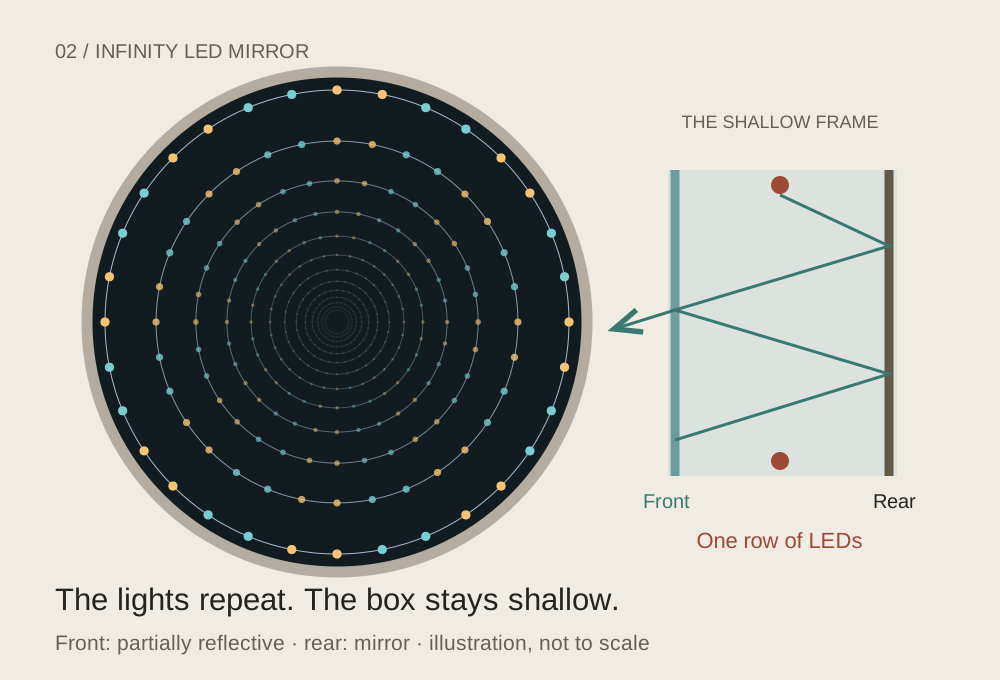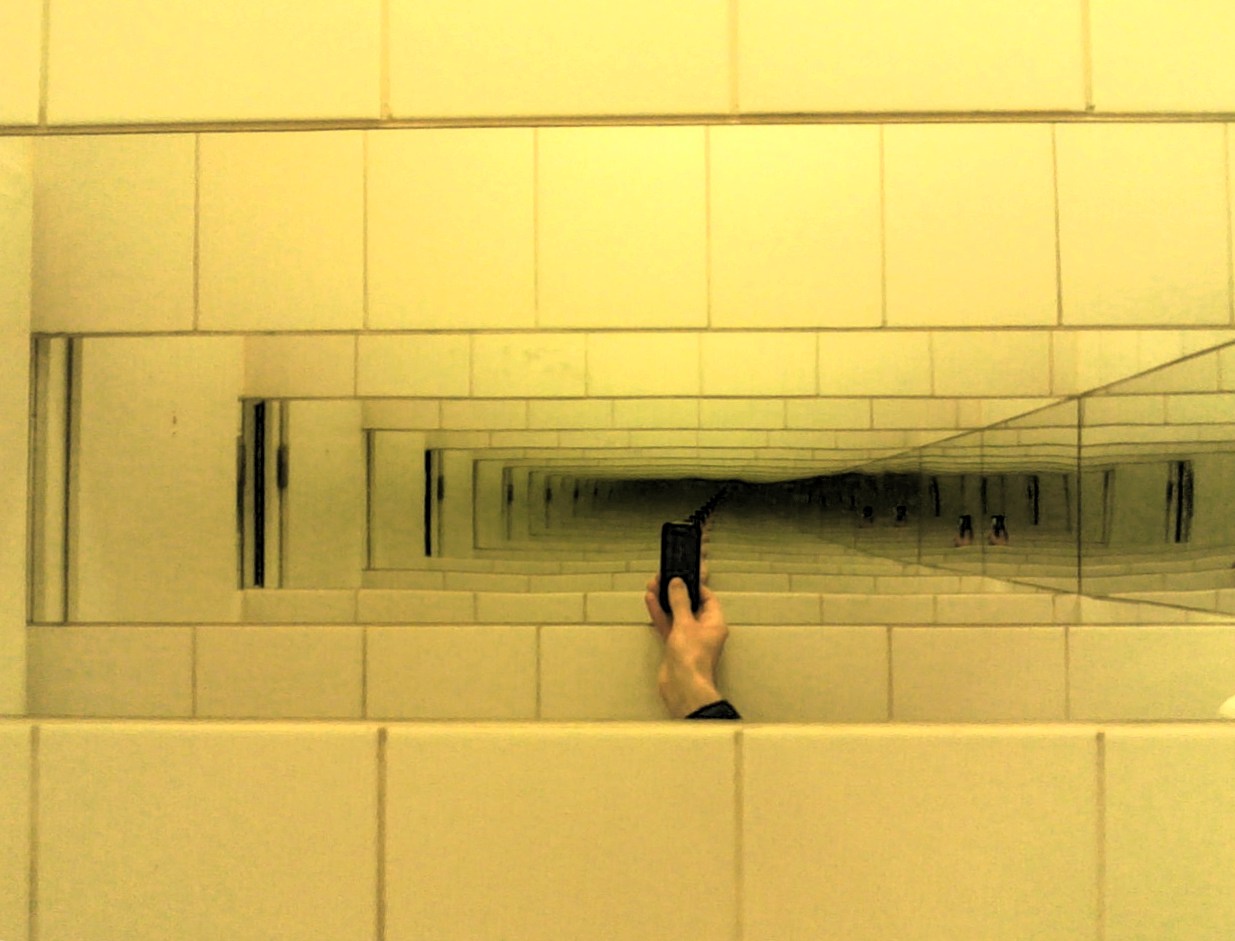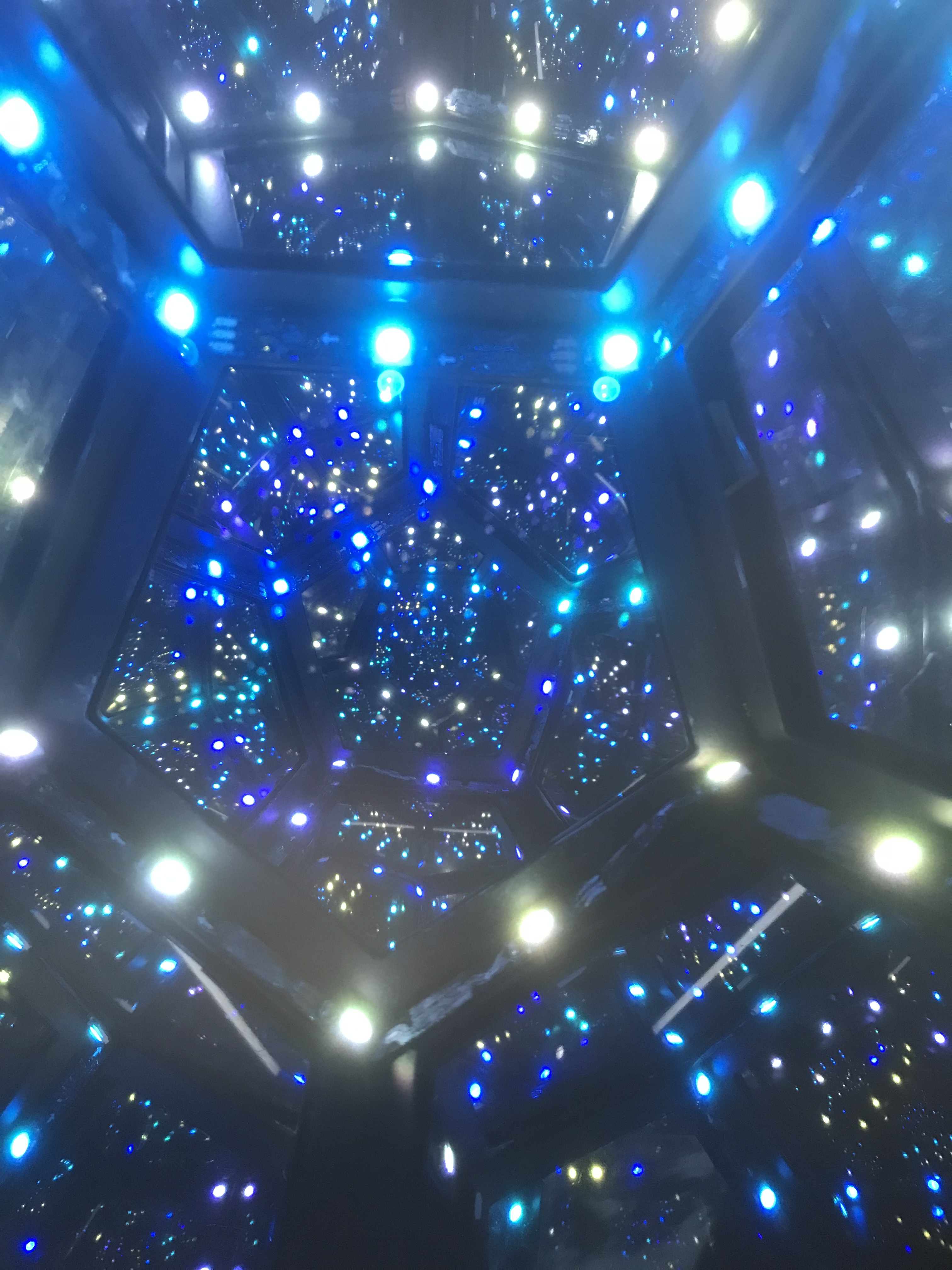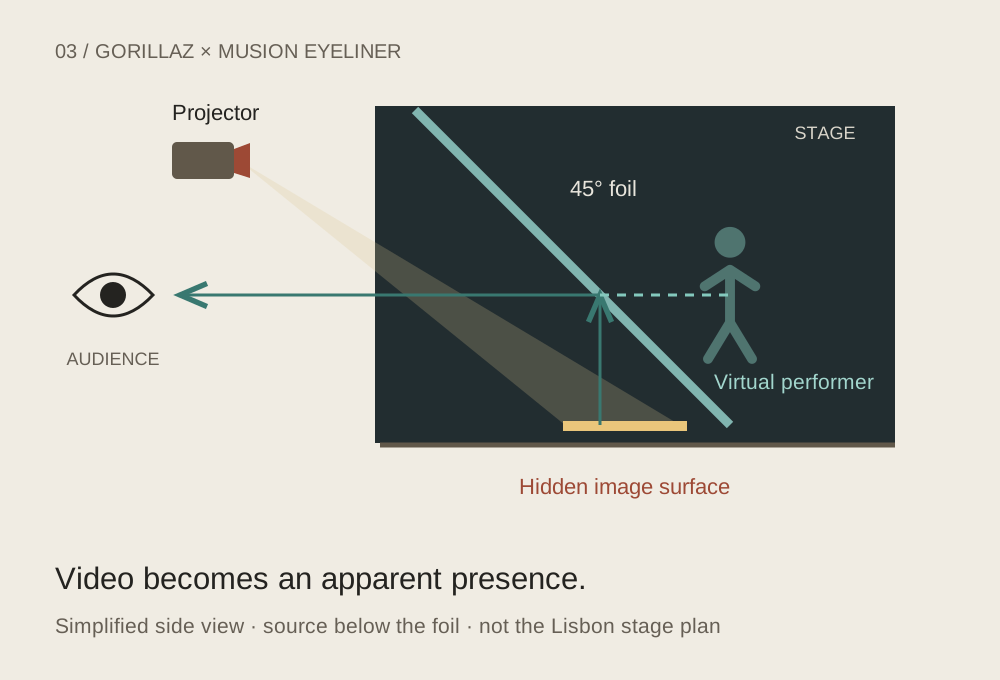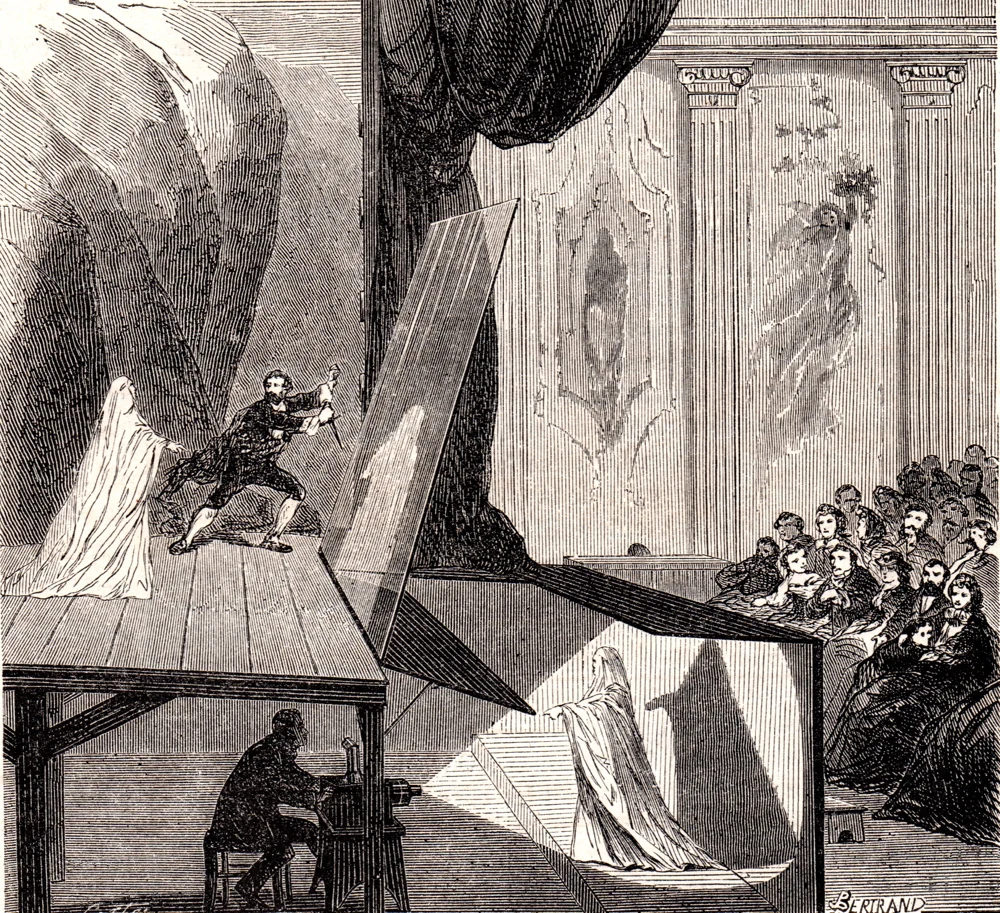
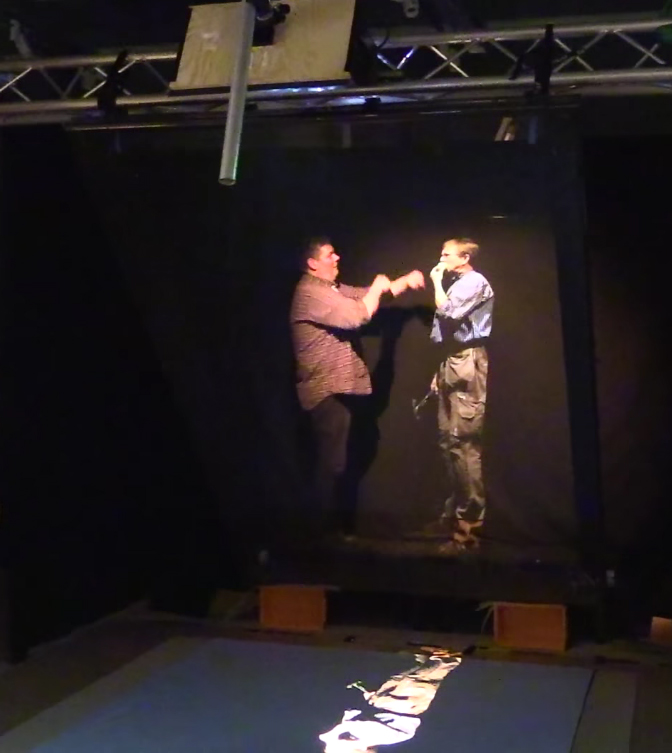
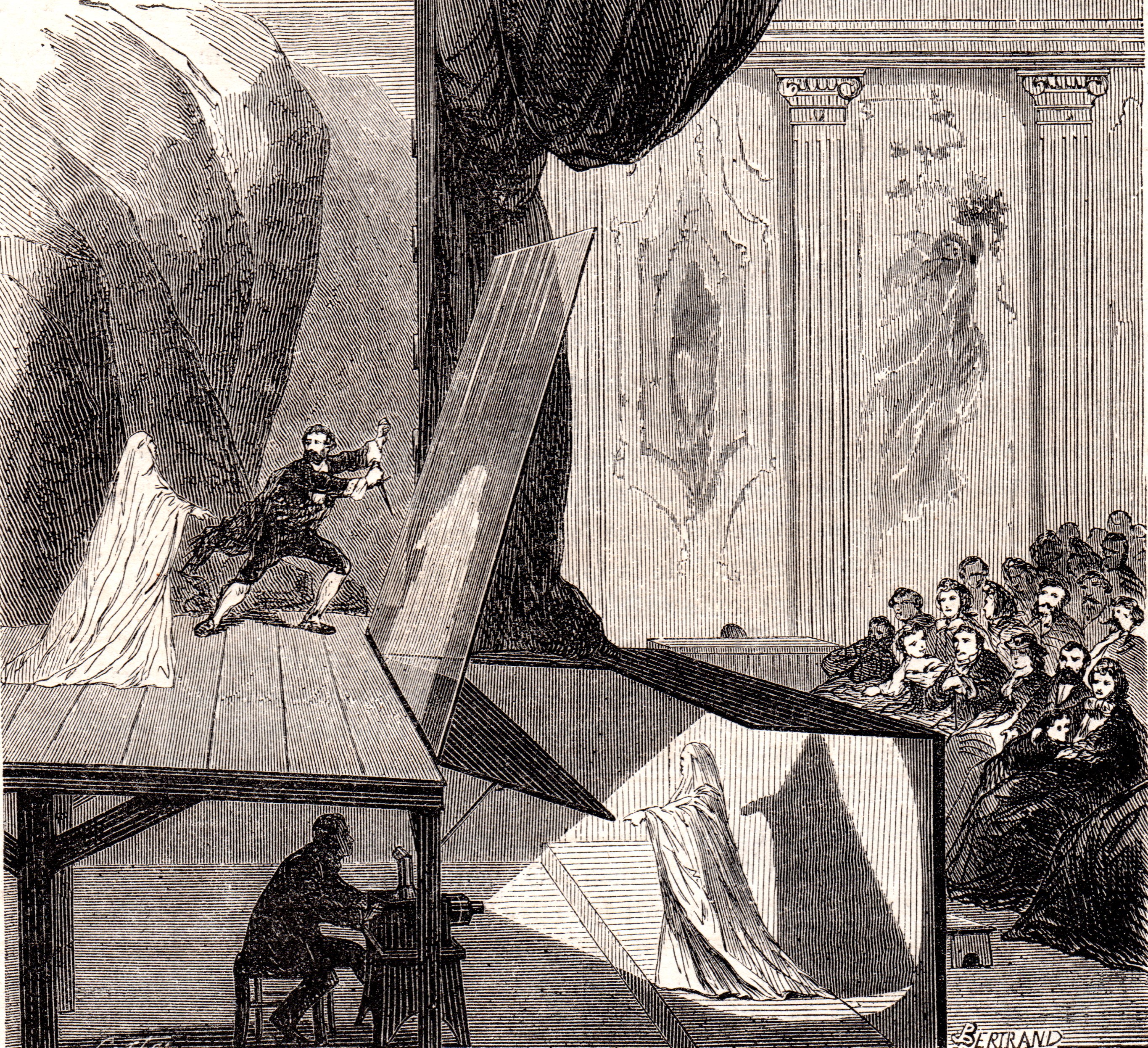
See a real display and a historical stage arrangement
Pepper’s Ghost
A Victorian stage illusion, still used in displays and theatre
A figure appears on an empty stage, transparent enough for the scenery to show through. Its real source is hidden elsewhere.
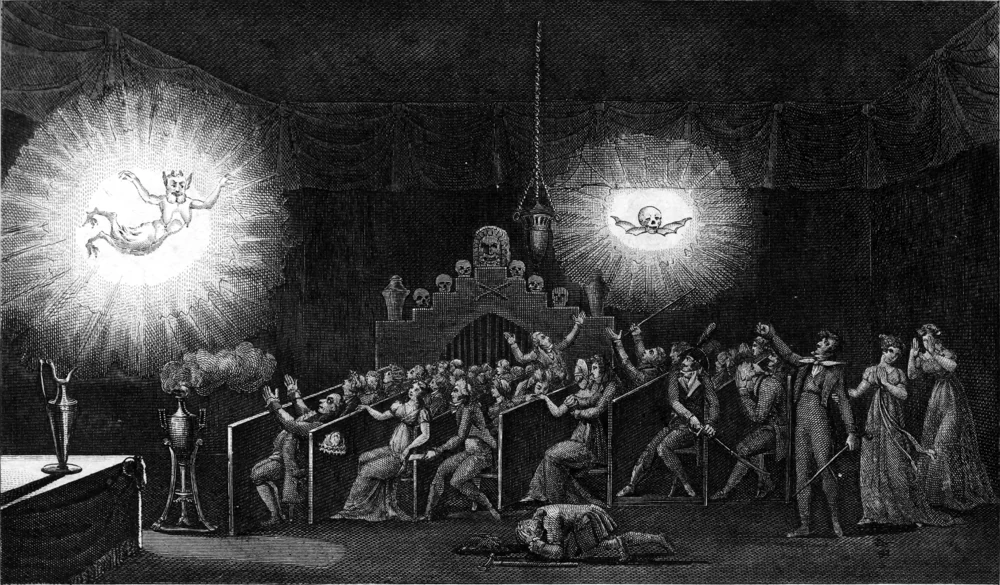
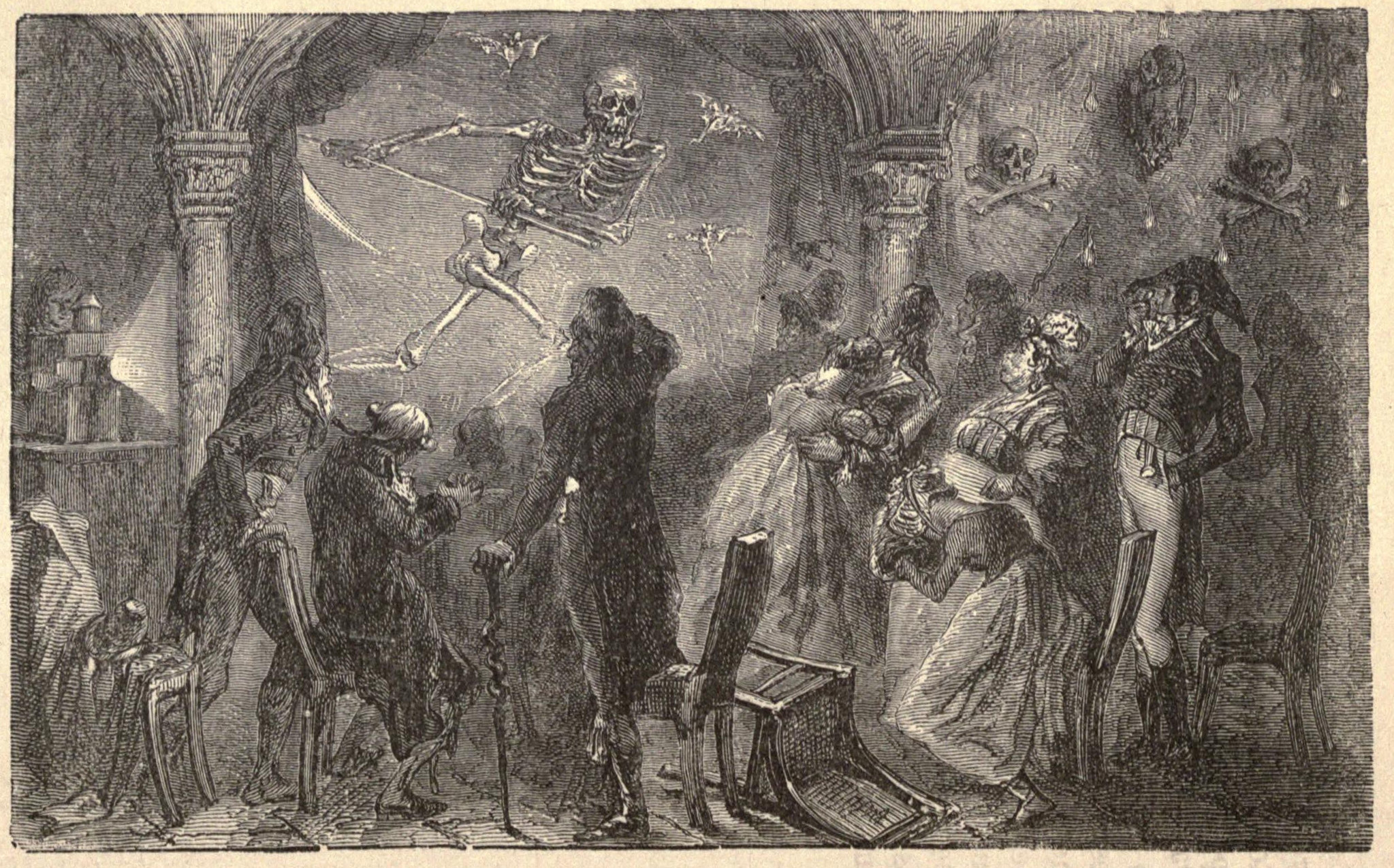
Henry Dircks devised an arrangement for making a reflected figure appear in a theatrical scene. John Henry Pepper adapted the idea for a large audience at London’s Royal Polytechnic Institution. Pepper presented it in December 1862 in a performance based on Charles Dickens’s The Haunted Man; the two men jointly patented their apparatus in 1863. Earlier phantasmagoria ghost shows used magic-lantern projection. Pepper’s reflected apparitions became another strand of theatrical ghost entertainment, including the Polytechnic’s staging of Dickens’s The Haunted Man.
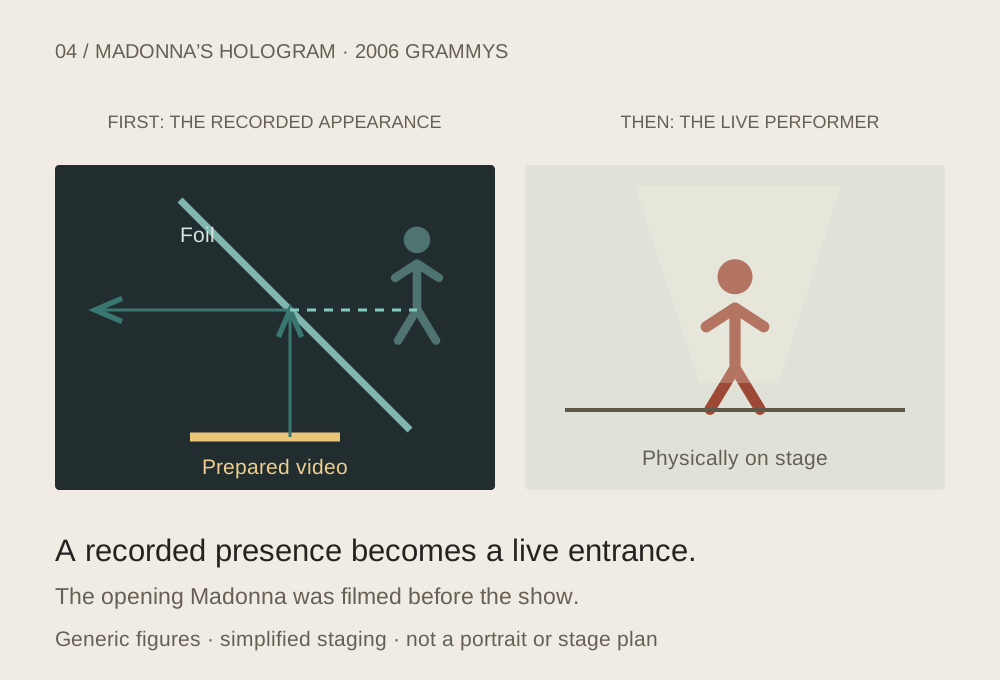
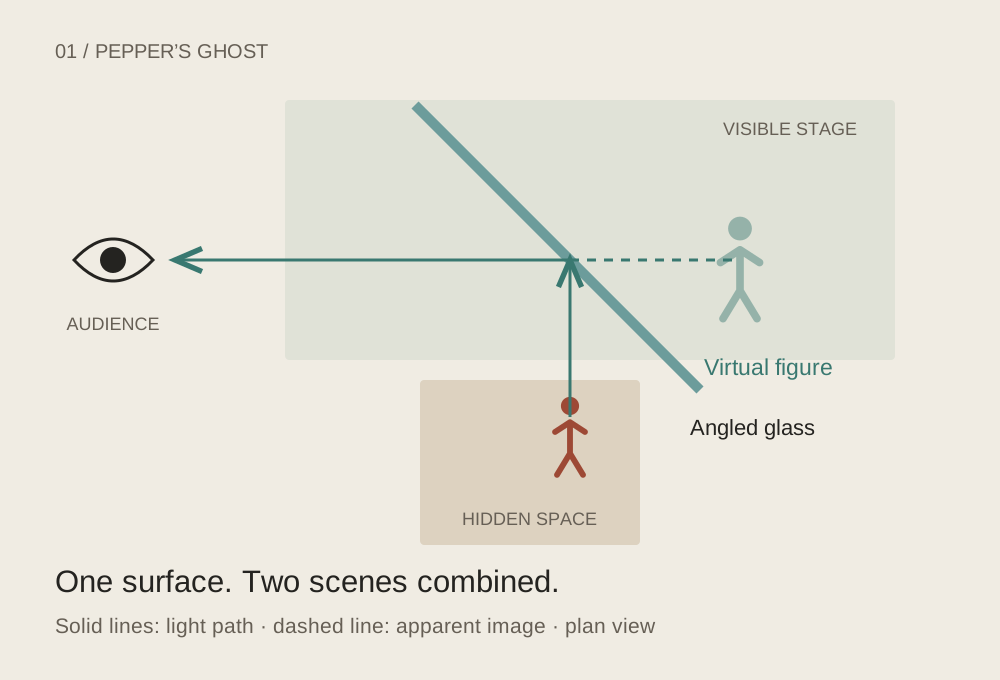
An angled sheet of clear glass transmits the view of the stage while reflecting a brightly lit figure concealed beside or below it. The audience combines the transmitted scene with the reflected image and sees an apparent figure behind the glass. Carefully controlled lighting hides the glass and the source, and makes the figure appear or disappear.
Trace the light from the hidden figure to the glass and then towards the audience. Imagine dimming the hidden figure: its reflection fades while the visible stage stays in view.
The image is a reflection, rather than a holographic reconstruction. The diagram shows a simplified arrangement viewed from above; it is not a reconstruction of the original theatre.
Henry Dircks and John Henry Pepper
- University of Westminster Archives — Ghosts and Pantos at the RPI ↗
- Wessex Archaeology — plate glass, Dircks and Pepper ↗
- Science Museum Group — phantasmagoria lanterns ↗
- Science Museum — Victorian Christmas Chemistry ↗