Transmission holography — Optical Interactions
Gary Fisher · Optical Interactions
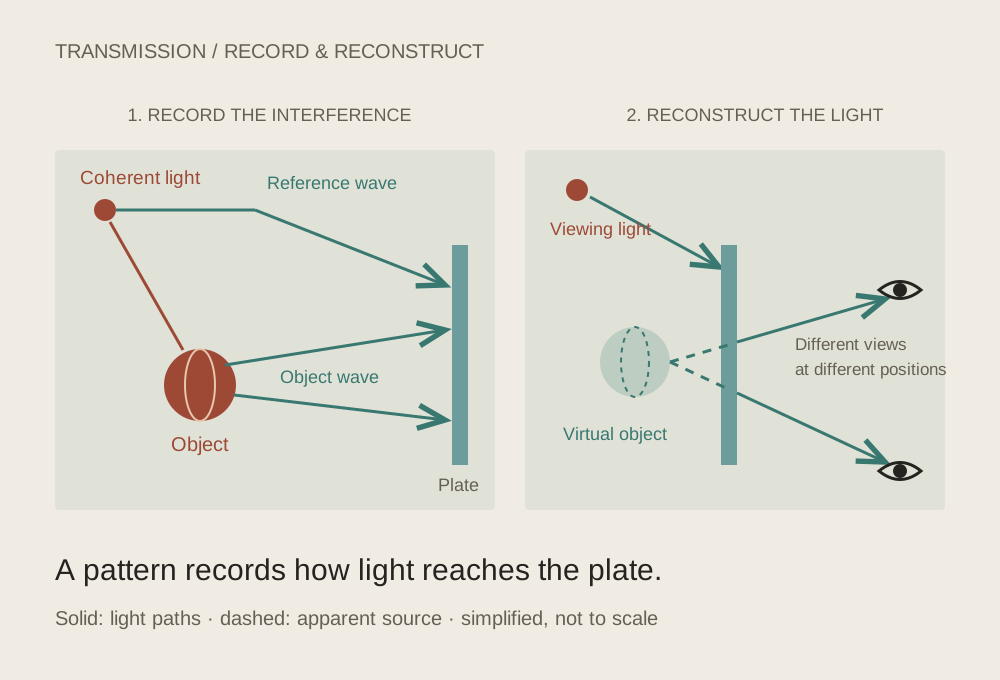
A flat glass plate reconstructs light from a still life. Move sideways and the objects reveal a different view, as though you were looking through a window.
Find Sphere in the 1975 exhibition catalogue (PDF) ↗
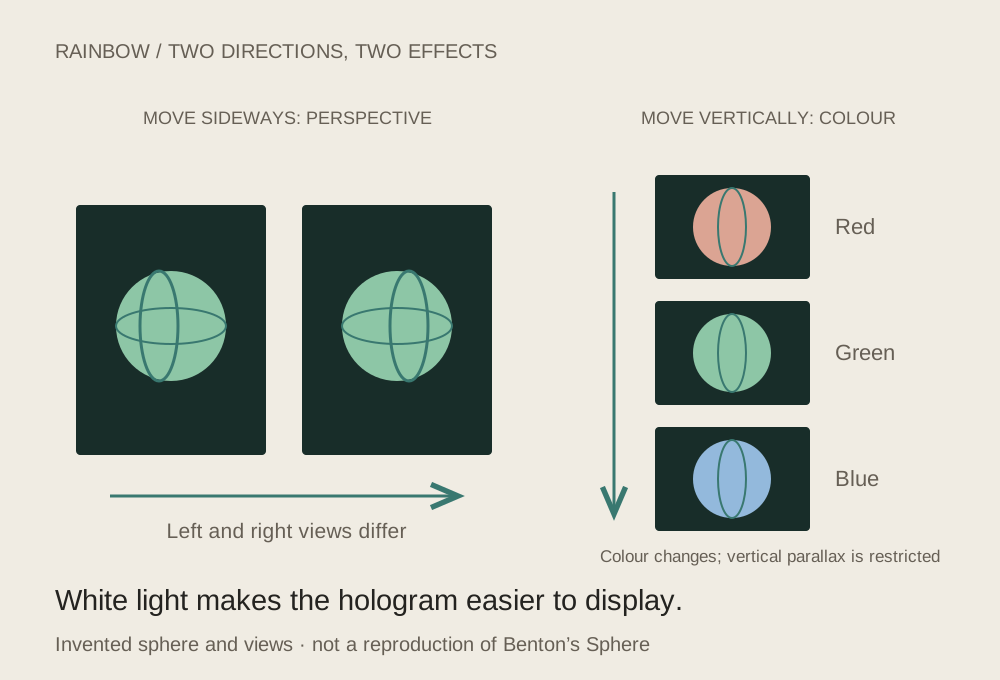
A hologram becomes visible in ordinary white light. Move sideways to explore depth; move vertically and its colour changes through the spectrum.
Find Sphere in the Museum of Holography’s 1975 exhibition catalogue, then compare the two directions in the diagram. In a rainbow hologram, sideways movement changes perspective; vertical movement mainly changes colour. Look for a similar effect in a holographic foil on a card or package.
Through Mirror · original explanatory diagram
Original file & attribution · CC0 1.0
Original explanatory diagram created for Through Mirror. It illustrates the optical principle and is not a photograph of a performance or installation. Gallery previews may be resized or converted to WebP; animated previews show the first frame.
Download imageA hologram becomes visible in ordinary white light. Move sideways to explore depth; move vertically and its colour changes through the spectrum.
Find Sphere in the Museum of Holography’s 1975 exhibition catalogue, then compare the two directions in the diagram. In a rainbow hologram, sideways movement changes perspective; vertical movement mainly changes colour. Look for a similar effect in a holographic foil on a card or package.
A rainbow hologram is transferred from a master using a narrow horizontal slit. The slit preserves side-to-side perspective while restricting vertical parallax, reducing the blur that white-light reconstruction would otherwise produce. Different wavelengths emerge at different vertical angles. Moving your eyes up or down selects a different spectral colour; moving sideways still reveals different views of the object.
A flat glass plate reconstructs light from a still life. Move sideways and the objects reveal a different view, as though you were looking through a window.
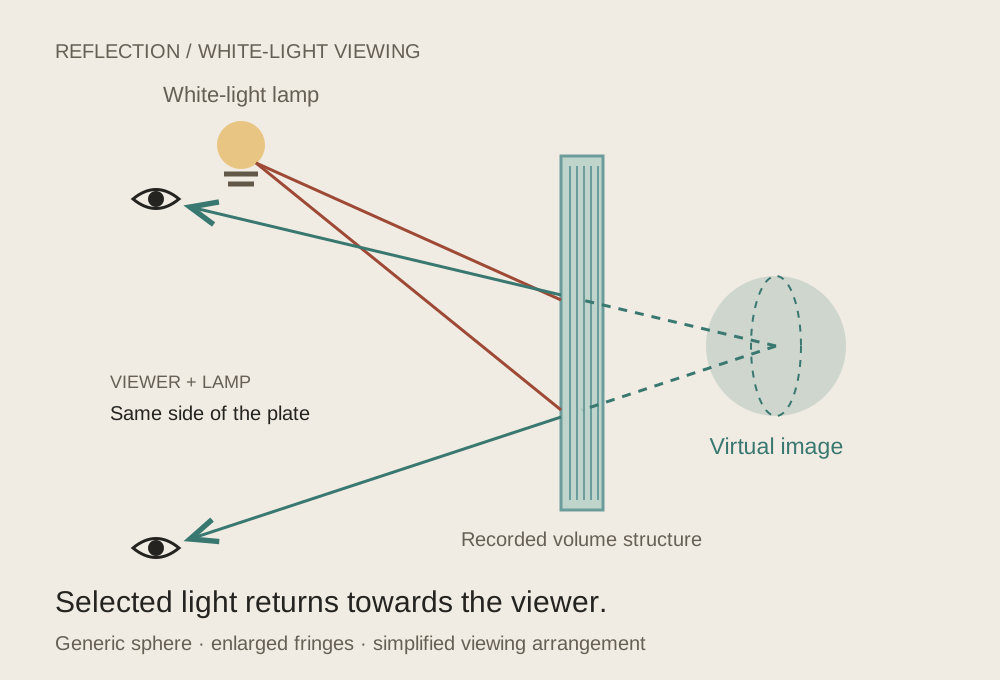
A lamp illuminates a flat plate and an image appears to occupy depth. The light returns towards the viewer from a recorded structure inside the holographic material.
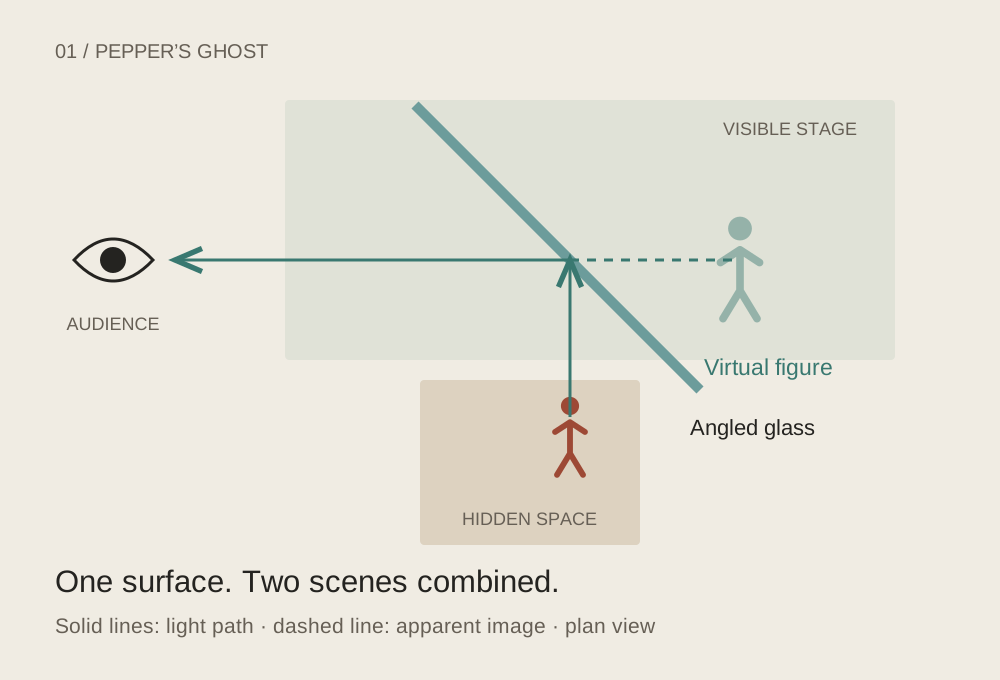
A figure appears on an empty stage, transparent enough for the scenery to show through. Its real source is hidden elsewhere.