Transmission holography — Optical Interactions
Gary Fisher · Optical Interactions
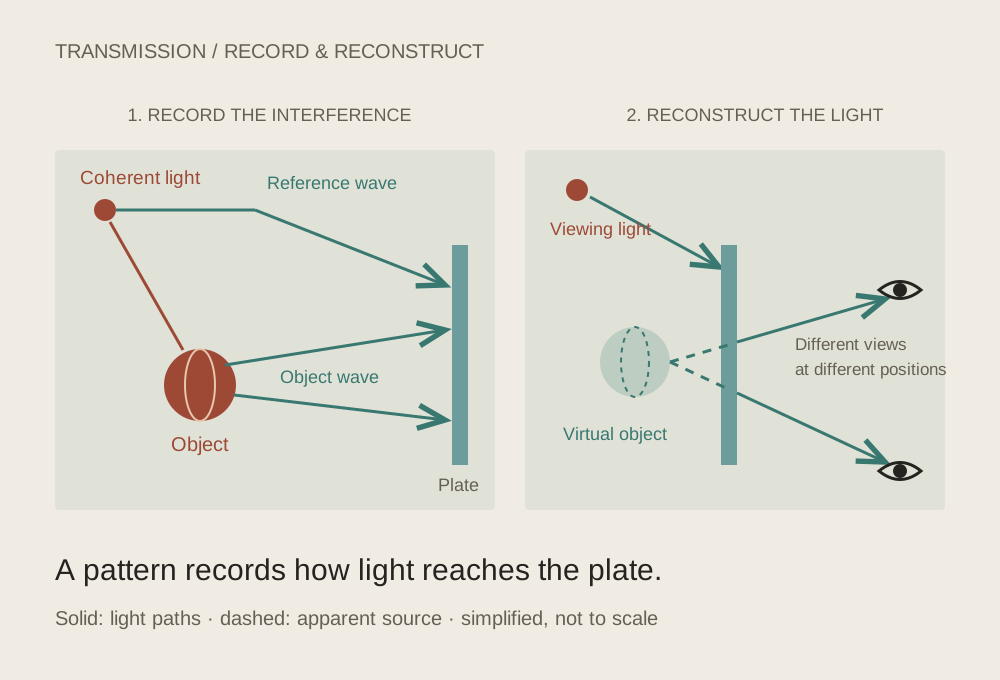
A flat glass plate reconstructs light from a still life. Move sideways and the objects reveal a different view, as though you were looking through a window.
See Schreiber’s reflection holograms ↗
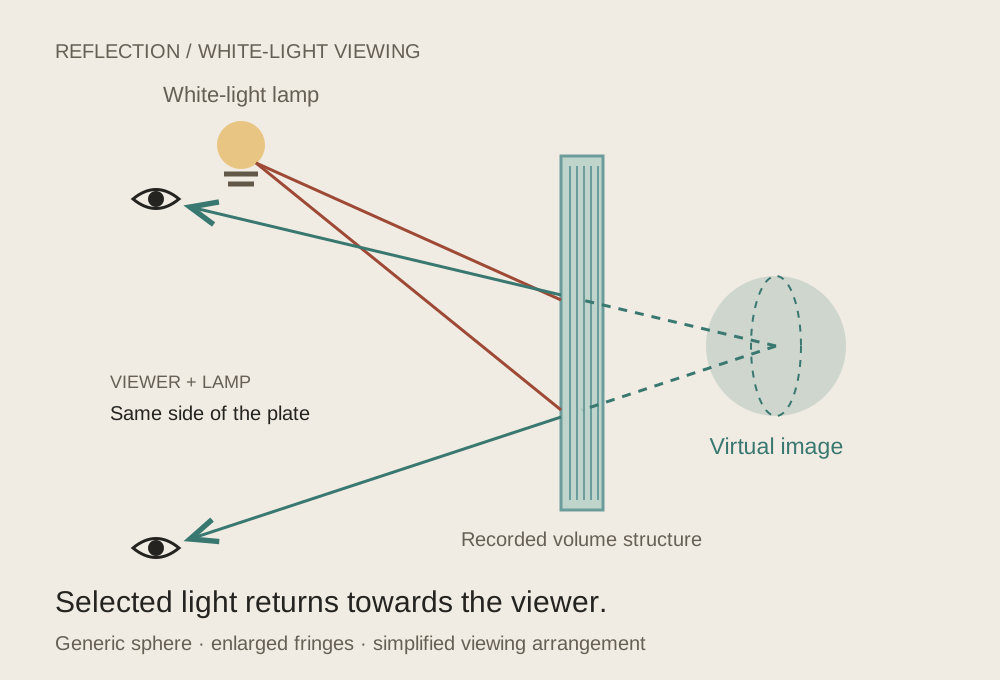
A lamp illuminates a flat plate and an image appears to occupy depth. The light returns towards the viewer from a recorded structure inside the holographic material.
Find Cassadaga (Spirit Pond) in Schreiber’s portfolio, alongside his Bowie reflection holograms and Heart Lake Denisyuk hologram. Compare the thin physical support with the pictured depth. In a physical display, move within the viewing zone while the lamp stays fixed to explore the changing perspective.
Through Mirror · original explanatory diagram
Original file & attribution · CC0 1.0
Original explanatory diagram created for Through Mirror. It illustrates the optical principle and is not a photograph of a performance or installation. Gallery previews may be resized or converted to WebP; animated previews show the first frame.
Download imageA lamp illuminates a flat plate and an image appears to occupy depth. The light returns towards the viewer from a recorded structure inside the holographic material.
Find Cassadaga (Spirit Pond) in Schreiber’s portfolio, alongside his Bowie reflection holograms and Heart Lake Denisyuk hologram. Compare the thin physical support with the pictured depth. In a physical display, move within the viewing zone while the lamp stays fixed to explore the changing perspective.
For a reflection hologram, the object and reference waves meet in the recording material from opposite sides. The resulting fine layers form a volume structure that selectively diffracts light back towards the illuminated side. A suitable white-light source can therefore reconstruct the image while the viewer and lamp are on the same side of the plate. Denisyuk’s single-beam arrangement is one way to make this type of hologram.
A flat glass plate reconstructs light from a still life. Move sideways and the objects reveal a different view, as though you were looking through a window.
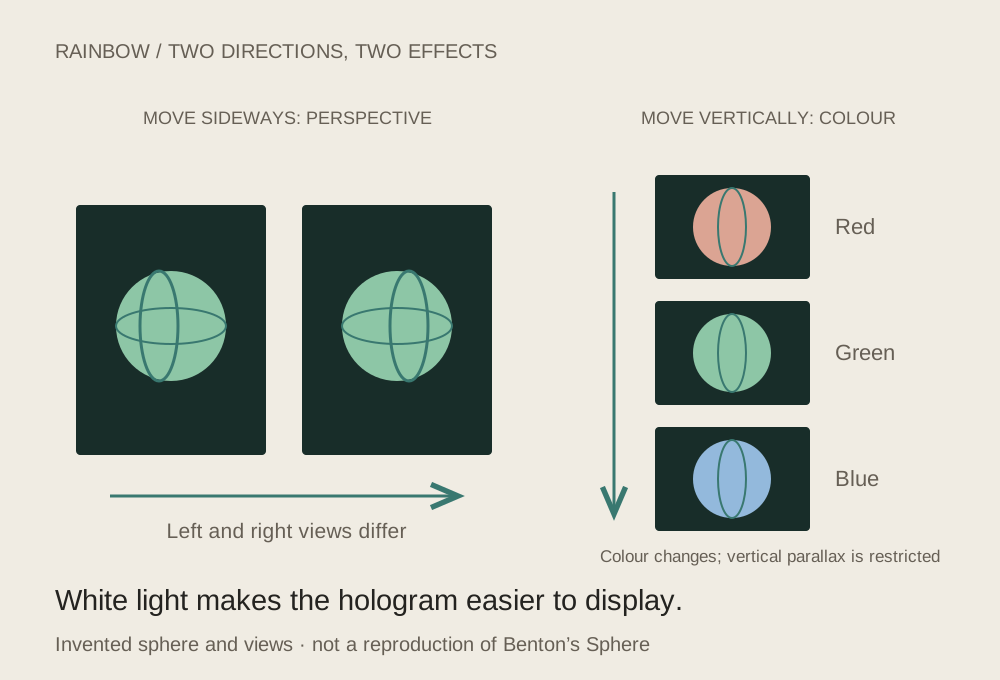
A hologram becomes visible in ordinary white light. Move sideways to explore depth; move vertically and its colour changes through the spectrum.
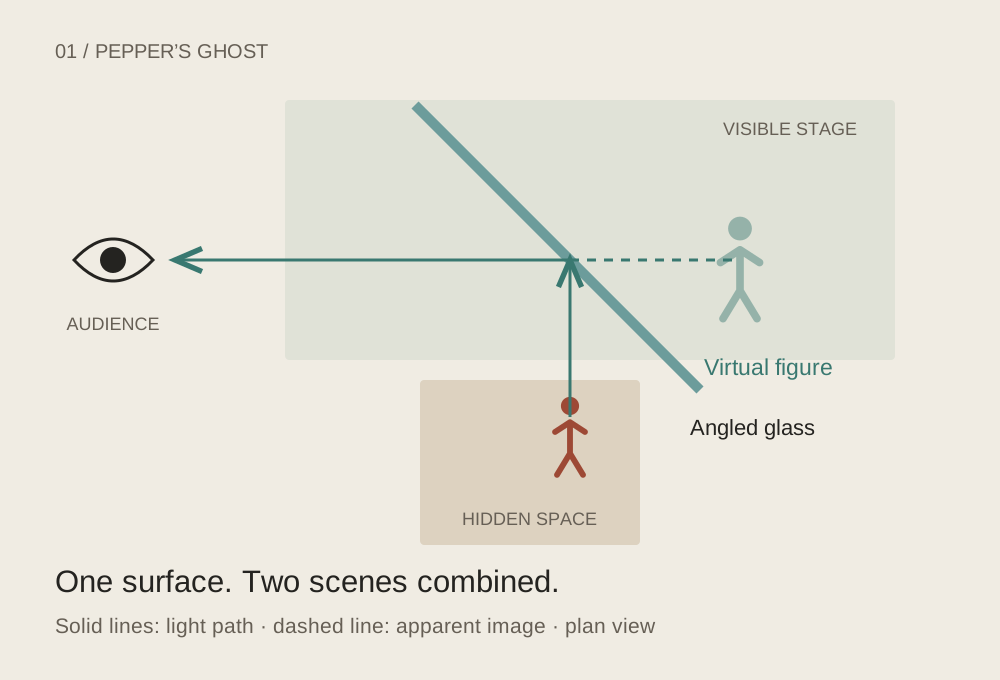
A figure appears on an empty stage, transparent enough for the scenery to show through. Its real source is hidden elsewhere.